Weaponizing Energy: Russia’s War in Ukraine and the Restructuring of European Energy Dependence

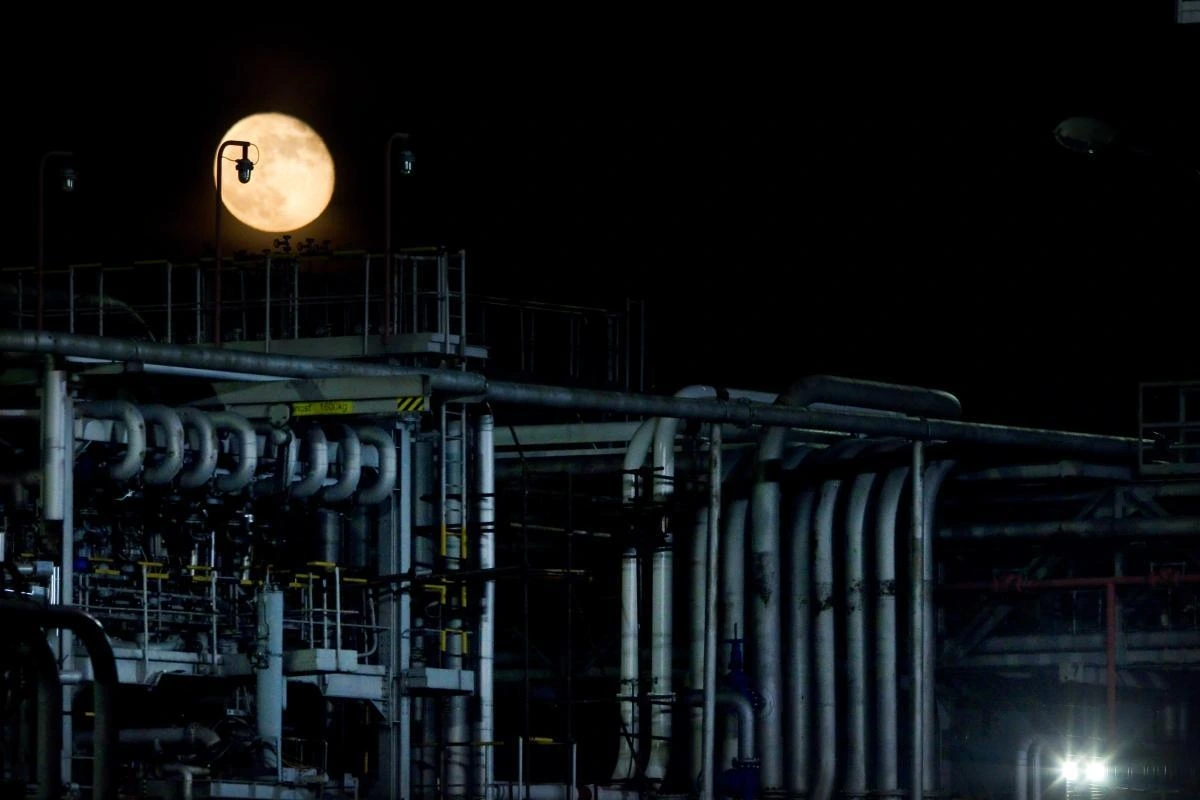
    © European Union, 2012, licensed under CC by 4.0 (audiovisual.ec.europe.eu). “The Slovnaft Bratislava Refinery in Slovakia (Druzhba Pipeline System).”

    The History of Europe’s Russian Energy Dependence

    To understand the current European climate surrounding Russian energy dependence, it is necessary to examine its decades-long reliance on Russian energy. Prior to the 2022 invasion of Ukraine, Russia created a system of energy dependence designed to increase its presence in European energy markets. During the Cold War, the Soviet Union constructed major pipeline networks to supply Europe, and after its collapse, Russia gained access to these systems. Control of these pipelines later allowed Russia to concentrate its power at the expense of a vulnerable Europe.

    Russia’s Druzhba Pipeline, Druzhba translating to “Friendship” in the Russian language, was designed by the Soviet Union to supply energy to Eastern European states and encourage economic integration. Beginning in Almetyevsk in south-eastern Russia, the pipeline stretches across Poland, Germany, Ukraine, Slovakia, the Czech Republic, and Hungary. With a capacity of 1.2-1.4 million barrels per day, the system has historically been a source of European oil (Chatham House 2009).

    Similarly, the Urengoy-Pomary-Uzhhorod gas pipeline, built in 1984, transports gas from Russia through Ukraine into Europe. Operated by Gazprom, the pipeline is over 4,451 km long and links gas production in Russia to European markets, reinforcing Russia’s control over supply chains (OffShore Tech 2021).
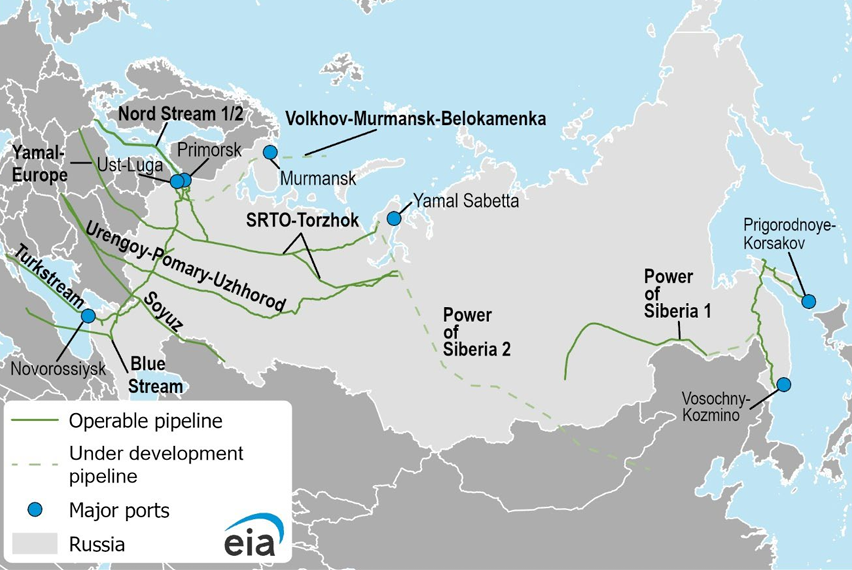
    © U.S. Energy Information Administration, 2024 (eia.gov). “Map of Major Pipelines and Ports for Russia’s Natural Gas, 2024.”

    Russia’s more recent energy projects – Nord Stream 1 and 2 – were developed to transport gas directly from Russia to Germany via the Baltic Sea. These pipelines – maintained by several transnational companies (including Gazprom) – noticeably differ from earlier routes in that they bypass transit countries such as Ukraine and Poland, effectively increasing Russian control (Європейський парламент 2025). Although Nord Stream 1 is now inoperative and Nord Stream 2 never opened due to international pressure, both illustrate Russia’s long-term strategy to maintain influence over Europe’s energy.

    This cycle of interdependence is described by Henry Farrell and Abraham Newman’s concept of “Weaponized Interdependence,” a process in which global economies have an “asymmetrical” power dynamic with one country having greater influence over a trade relationship than the other (Farrell and Newman 2019). In many instances, this allows for a country to capitalize on its abilities for coercion purposes. In the case of Europe’s interdependence, Russia has exerted its influence over its energy infrastructure to pressure allies of Ukraine, leading to visible structural vulnerabilities.

    Russia’s War in Ukraine and Europe’s Response

    Russia has consistently remained a major supplier of European energy, a relationship that caused complications during its invasion of Ukraine. Prior to the invasion, Russia accounted for 45% of EU gas and 27% of its oil (Європейський парламент 2025).

    In response to Russia’s invasion, the European Commission introduced REPowerEU, an initiative aimed at reducing reliance on Russian energy through diversification and renewable investment. Sanctions on Russian oil and gas soon followed, significantly reducing imports to approximately 19% for gas and 3% for oil by 2024 (Європейський парламент 2025). Despite this transition, a notable divide between Western/Northern Europe and Central/Eastern Europe has emerged, where reliance on Russian resources remains higher. The reliance of countries in Europe by region is broken down below into four countries and their relationship with Russian energy sources:

    • Німеччина

    After the 2022 invasion, Germany reduced its dependence on Russian energy pipelines by investing in liquefied natural gas (LNG). This decision was made amidst fears of Russia’s capacity to shut down energy resources and nationwide pressure to establish domestic supplies of gas. Since 2023, Germany has effectively ended imports of Russian oil (Federal Ministry for Economic Affairs and Climate Action 2024).

    • Finland

    Prior to Russia’s invasion of Ukraine, Finland had been consistently reliant on Russian energy,            with energy imports from Russia comprising roughly 34% of Finland’s total energy. Since the invasion, Finland has been a strong supporter of the REPowerEU initiative, aligning with international goals to eliminate Russian energy relationships (Finnish Government 2025).

    • Slovakia

    Slovakia continues to import gas and oil from Russia, facing a dangerous lack of diversification that leaves it vulnerable to high energy prices. Slovakia is a client of the Druzhba Pipeline and is bound to Russian resources via a long-term supply contract that expires in late 2029 (Європейська комісія 2026).

    • Hungary

    Hungary continues to use Russian fossil fuels despite being instructed with country-specific recommendations (CSRs) to eliminate a relationship with Russia and to establish independent energy sources to promote domestic growth. As of 2025, roughly 90% of Hungary’s oil was imported from Russia (Європейська комісія 2026).

    • The United Kingdom

    Despite publicly opposing Russian actions and establishing international credibility as a leader in the ban on Russian energy, the UK has recently struggled to maintain its hard policies due to limited energy supplies and price surges. After receiving criticism for its failure to ban oil from Russia that was processed in third-party countries, the UK attempted to create formal sanctions but continues to face challenges (BBC 2026). Through the organization of “shadow fleets” – Russian oil tankers that operate under poor conditions, falsified papers, and discreet destinations – Russia continues to directly conflict with UK energy laws and maritime security to complete unsanctioned deliveries of oil (Caprile and Leclerc 2024).

    Energy as a Geopolitical Weapon

    As countries across Europe continue to struggle with independence from Russian energy, Russia has capitalized on this hesitation to leverage energy as a geopolitical tool. By reducing gas flows to Europe and limiting supply by 50% in 2022, Russia increased prices and political pressure on Ukraine’s allies. Gazprom also reduced exports and left European storage sites unfilled, contributing to further instability (International Energy Agency 2022). This usage of energy as a tool rather than a universal system poses an extreme threat to countries relying on Russia for resources. Countries that struggle with energy vulnerability face the threat of resources being cut off, limited control over price shocks, and power shortages in vital areas such as infrastructure or the military. Additionally, Europe’s infrastructure continues to struggle against Russian attacks on undersea electricity and gas pipelines in the Baltics. Sensing weak points in Europe’s infrastructure, Russian shadow fleets have specifically targeted outdated electricity sources that are inexperienced in sustaining critical attacks (European Union Institute for Security Studies 2025).
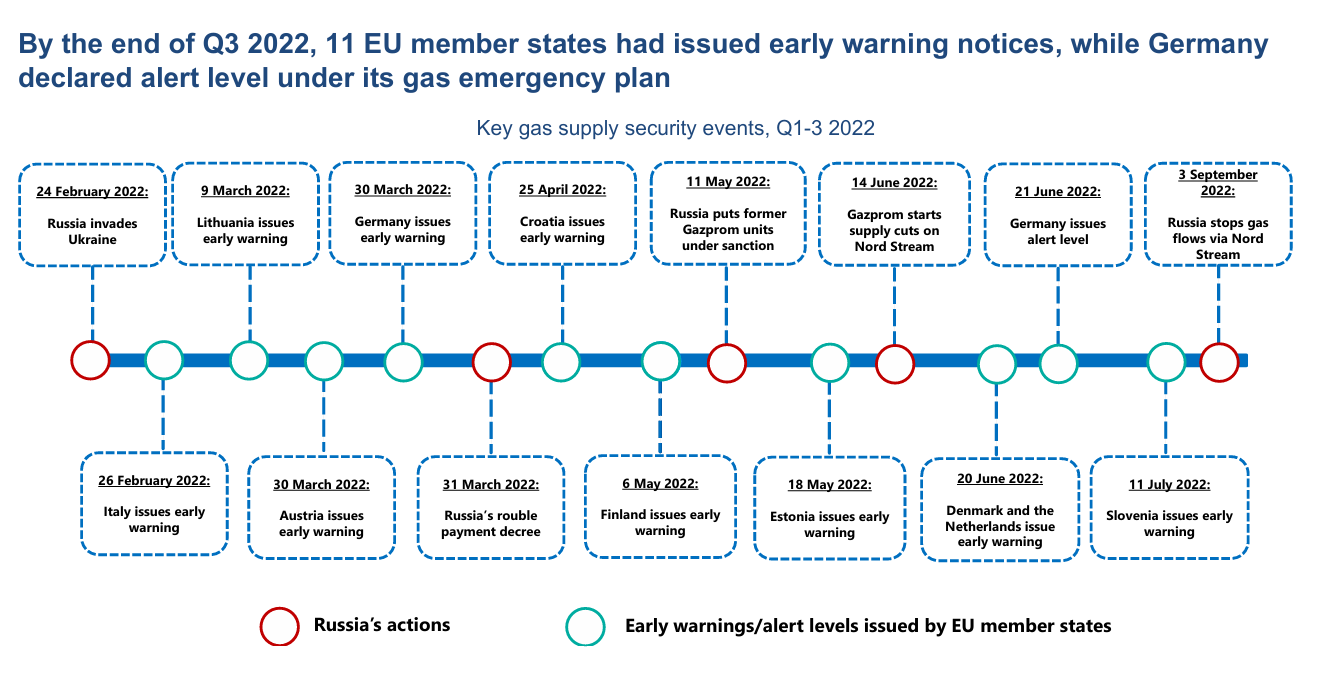
    © International Energy Agency (IEA), 2022, licensed under CC BY 4.0 (iea.org). “Gas Market Report, Q4-2022: Including Global Gas Security Review 2022.”


    Despite this, Europe has demonstrated strong resilience through investments in alternative energy sources, storage, and infrastructure that allow countries to withstand Russia’s supply cuts. NATO has been a particular supporter of protecting critical infrastructure, announcing its plans to include the protection of critical infrastructure in its defence spending (Knapp, Olson, and Shahim 2025). Continued financial and military support for Ukraine has persisted despite Russian threats to cut off energy entirely. Gazprom even suffered an unexpected loss as a result of its actions, losing revenue and customers, which struck a significant blow to the Russian economy (European Relations 2025).

    Liquefied natural gas (LNG) has become a game-changer for European countries shifting away from Russian energy. As international initiatives such as REPowerEU urge the cutting of ties between European and Russian energy trade relationships, European countries have turned to LNG to store energy and have stronger back-up options safe from Russian control (Onyango 2026).
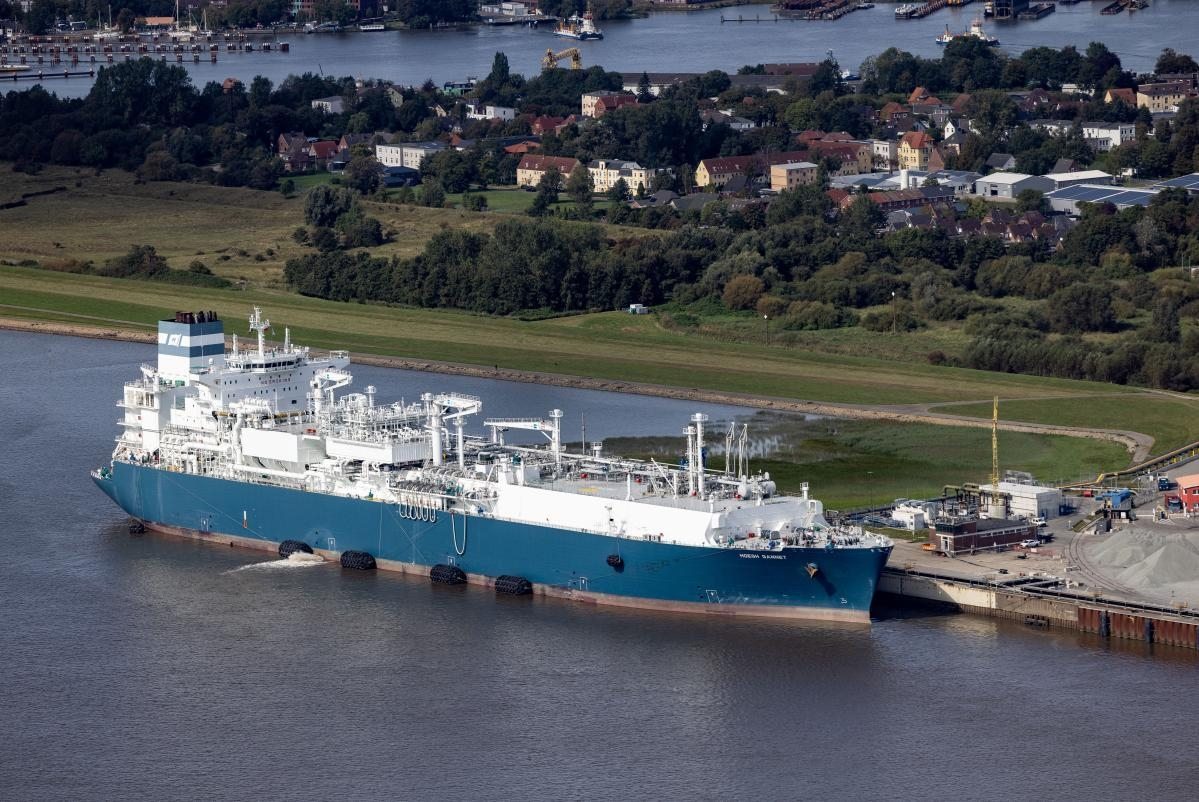
    © European Union, 2023, licensed under CC by 4.0 (audiovisual.ec.europe.eu). “Floating LNG Terminals, Germany.”


    Although Europe has established its credibility by diversifying its energy sources, vulnerabilities will remain until reliance on Russian energy is significantly reduced across Europe. Russia’s repeated threats illustrate that any rollback in restrictions can be dangerous for enabling future behavior, particularly during periods of global instability and rising energy prices (CNBC 2026). Energy independence is therefore critical not only for economic stability but also for maintaining unified support for Ukraine (Transatlantic Dialogue Center 2024). By giving in to Russian demands, the aid presented to Ukraine becomes less credible.

    Висновок

    Europe’s dependence on Russian energy – a relationship that resulted from decades of political and economic decisions made long before the invasion of Ukraine – has continuously enabled Russia to use its control over Europe’s resources as a geopolitical weapon. Although Europe has always been reliant on Russian energy, the 2022 invasion of Ukraine drew attention to the vulnerabilities that European countries face.

    While the European Union, NATO, and leading European countries have made significant progress in orchestrating a shift away from Russian energy reliance – through initiatives such as REPowerEU and recommended investments in LNG – the continued trade between Russian energy companies and more vulnerable European countries continues to hinder the strength of the west in supplying aid to Ukraine.

    The weaponisation of energy by Russia demonstrates the need to re-evaluate energy policy in the context of international crises, treating it as a national security concern. Through greater diversification of resources and strategic investment in resilient energy, Europe can sustain its sanctions on Russia while reducing its own vulnerabilities.

    Opportunities for Advocacy

    Energy policy is not solely determined by governments – public advocacy plays a role. Below is a dedicated list of priorities to speak to your Members of Parliament about:

    1. Maintaining consistency between sanctions and energy practices
    2. Diversifying energy sources through liquefied natural gas (LNG), renewables, and regional cooperation
    3. Investing in domestic infrastructure for storage and processing
    4. Increasing transparency around indirect energy imports

    Reference List

    AT A GLANCE Plenary -May II 2025. (n.d.). [online] Available at: https://www.europarl.europa.eu/RegData/etudes/ATAG/2025/772862/EPRS_ATA(2025)772862_EN.pdf

    Caprile, A. and Leclerc, G. (2024). Russia’s “shadow fleet”: Bringing the Threat to Light. [online] Available at: https://www.europarl.europa.eu/RegData/etudes/BRIE/2024/766242/EPRS_BRI(2024)766242_EN.pdf

    Carmen (2021). Urengoy–Pomary–Uzhgorod, Russia. [online] Offshore Technology. Available at: https://www.offshore-technology.com/marketdata/urengoy-pomary-uzhgorod-gas-pipeline-russia/

    Economy and Finance. (2025). Country report – Hungary. [online] Available at: https://economy-finance.ec.europa.eu/economic-surveillance-eu-member-states/country-pages-including-country-reports/country-report-hungary_en

    Economy and Finance. (2026). Country report – Slovakia. [online] Available at: https://economy-finance.ec.europa.eu/economic-surveillance-eu-member-states/country-pages-including-country-reports/country-report-slovakia_en

    Ellyatt, H. (2026). Return to Russian energy would be “strategic blunder,” EU says — but Moscow smells blood. [online] CNBC. Available at: https://www.cnbc.com/2026/03/11/eu-russian-gas-oil-iran-war-ukraine.html?msockid=06ba81f2ef3f6c3f3a349521ee976d58

    European Union Institute for Security Studies. (2025). On a war footing: Securing critical energy infrastructure. [online] Available at: https://www.iss.europa.eu/publications/briefs/war-footing-securing-critical-energy-infrastructure

    Federal Ministry of Economic Affairs and Climate Action (2024). Annual Economic Report: Boosting Competitiveness – Sustainably. [online] Available at: https://www.bundeswirtschaftsministerium.de/Redaktion/EN/Publikationen/Wirtschaft/the-2024-annual-economic-report-of-the-german-federal-government.pdf

    Farrell, H. and Newman, A.L. (2019). Weaponized Interdependence: How Global Economic Networks Shape State Coercion. International Security, 44(1), pp.42–79. doi:https://doi.org/10.1162/isec_a_00351.

    Finnish Government. (2025). Imports of Russian gas into the European Union to end. [online] Available at: https://valtioneuvosto.fi/en/-/1410877/imports-of-russian-gas-into-the-european-union-to-end

    Gas Market Report, Q4-2022 including Global Gas Security Review 2022. (n.d.). [online] Available at: https://www.oecd.org/content/dam/oecd/en/publications/reports/2022/10/gas-market-report-q4-2022_20e75ce9/494beb40-en.pdf

    Geneletti, G. (2025). Energy As A Geopolitical Weapon. [online] EuropeanRelations.com. Available at: https://europeanrelations.com/energy-as-a-geopolitical-weapon/

    Horbenko, A. (2024). European Energy Policy and Security in Light of Russia’s War in Ukraine. [online] Transatlantic Dialogue Center. Available at: https://tdcenter.org/2024/11/07/european-energy-policy-and-security-in-light-of-russias-war-in-ukraine/

    Islam, F. (2026). UK loosens Russian oil sanctions as fuel prices rise. [online] 20 May. Available at: https://www.bbc.com/news/articles/cy42x3g7r89o

    Knapp, J., Olson, C., and Shahim, C. (2025). (n.d.). [online] Available at: https://www.atlanticcouncil.org/wp-content/uploads/2025/10/enhancing-nato-operational-readiness-energy-interoperability.pdf

    Onyango, D. (2026). [Analysis] Europe’s Russian Gas Divorce: How the Phase Out Highlights Other Pipeline Projects. [online] pipelinejournal. Available at: https://www.pipeline-journal.net/news/analysis-europes-russian-gas-divorce-how-phase-out-highlights-other-pipeline-projects

    Stevens, P. (n.d.). Transit Troubles Pipelines as a Source of Conflict A Chatham House Report. [online] Available at: https://www.chathamhouse.org/sites/default/files/public/research/energy%2c%20environment%20and%20development/r0309_pipelines.pdf

    Author

    Caitlin Solis

    Caitlin Solis is an undergraduate student at Brown University studying Economics and International and Public Affairs. With a strong interest in economic patterns and international security, she is actively involved on campus as an editor for the Brown Journal of History and as a student chair for both the Economics and International and Public Affairs Undergraduate Groups. Caitlin has conducted research for several historical organizations, most recently as a Research Fellow for the Jay Heritage Center. She currently serves as a Community Outreach and Research Intern at European Action for Ukraine.

    Поділіться цим:

    EN