 NL
NL  EN
EN  UA
UA  TW
TW  FR
FR  DEUTSCH
  HU
HU  IT
IT  PL
PL  PT
PT  RO
RO  ES
ES Auteur: Brian Haughton
Wat is REPO?
Nadat Rusland in februari 2022 een grootschalige invasie in Oekraïne lanceerde, vormden de Verenigde Staten en hun bondgenoten het Russische elites, gevolmachtigden en oligarchen Task Force (REPO), bestaande uit de Groep van Zeven (G7), de Europese Unie (EU) en Australië. (Brookings)
In maart 2022 richtte de Europese Commissie de "Bevriezen en in beslag nemen" taskforce om de bevriezing en inbeslagname van Russische tegoeden in EU-handen en implementatie van Sancties op EU-niveau besloten door de Raad van de Europese Unie. Freeze and Seize bestaat uit vertegenwoordigers van de Europese Commissie, Europol (het EU-orgaan voor politiële samenwerking), Eurojust (het EU-orgaan voor onderzoek en vervolging van grensoverschrijdende misdrijven) en nationale contactpersonen uit elke lidstaat. (Europese Commissie)
Bevroren Russische tegoeden
Ongeveer $280 tot $330 miljard aan Russische overheidsactiva zijn in beslag genomen en bevroren in het REPO-kader. Belgisch depot voor financiële effecten Euroclear beheert ongeveer $200 miljard van deze activa.ruwweg 90% van het totaal in Europa. Frankrijk bezit het grootste deel van de resterende 10%. Ook in Japan zijn activa bevroren voor een bedrag van ongeveer $50 miljard. Ter vergelijking: de Verenigde Staten hebben ongeveer $5 miljard. (Brookings; AP)
Tegen 2024 was het grootste deel van de schuldbewijzen vervallen tot cash in België, die Euroclear in geldmarkten plaatste. Van de ruwweg $7 miljard aan opgelopen rente die in 2024 werd gegenereerd, incasseerde de Belgische overheid ongeveer 25%, die ze toezegde naar Oekraïne te sturen. (Brookings) In mei 2024 eiste de Raad van de Europese Unie dat de rest van de rente naar Oekraïne zou gaan. (Consilium van de Europese Unie)
Wat is het plan van Europa om Oekraïne te steunen?
Het IMF schat dat Oekraïne 135 miljard euro ($161 miljard) nodig zal hebben voor zijn financiële en militaire behoeften in de tweejarige periode 2026-2027. Deze financiering is nodig om Oekraïne in staat te stellen zijn openbare diensten in stand te houden en zijn defensie-inspanningen te ondersteunen. (Kiev Post)
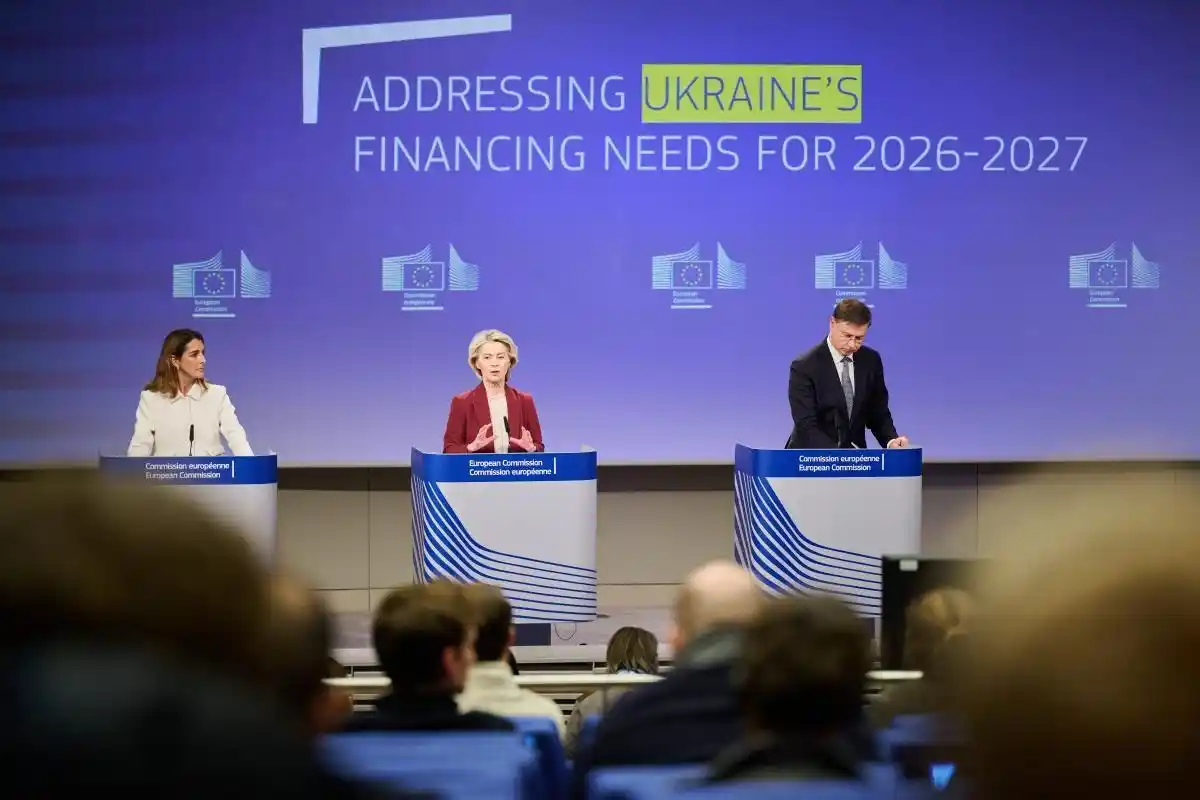
Volgens een plan dat de voorzitter van de Europese Commissie, Ursula von der Leyen, op 3 december 2025 presenteerde, wil de EU twee derde van dit bedrag dekken: 90 miljard euro. Het is de bedoeling dat het resterende derde deel (45 miljard euro) van andere internationale partners komt. (AP)
а. Oekraïne financieren via een 'herstellingslening' - met de bevroren tegoeden als onderpand
© Europese Unie, 2025, gelicentieerd onder CC BY 4.0 (audiovisueel.ec.)
Dit plan - door de voorzitter van de Europese Commissie, Ursula von der Leyen, voorgesteld als het 'Plan A' van de Commissie - houdt in dat Oekraïne een lening krijgt met de bevroren Russische tegoeden als onderpand. Euroclear zou de bevroren tegoeden moeten beleggen in een contract met de EU, waarbij de EU de middelen doorleent aan Oekraïne. Oekraïne hoeft de lening pas terug te betalen nadat het herstelbetalingen van Rusland heeft ontvangen ter compensatie van de schade die is veroorzaakt door de Russische invasie. (Reuters)
België bezit het merendeel van de bevroren tegoeden en zijn toestemming is vereist om dit plan uit te voeren. België heeft echter zijn verzet kenbaar gemaakt (Euronews):
Het voorstel, dat geen precedent heeft in de moderne geschiedenis, is vanaf het begin met ernstige bedenkingen ontvangen door zowel de Belgische regering als Euroclear.
Euroclear vreest ook dat het niet over de nodige liquiditeit zou beschikken om haar vordering op de Russische Centrale Bank te kunnen inlossen als de sancties voortijdig worden opgeheven en de lidstaten er niet in slagen om de €185 miljard op tijd bijeen te brengen.
De Belgische autoriteiten hebben ook gezegd dat ze vrezen dat Rusland hun tegoeden zal terugvorderen als ze een rechtszaak aanspannen en winnen, waardoor er een gat in de Belgische schatkist zou ontstaan ter grootte van de jaarlijkse federale begroting. België heeft zelfs gesuggereerd dat het land failliet zou kunnen gaan.
De Raad van de Europese Unie heeft een Regeling op 13 december de tegoeden van Rusland voor onbepaalde tijd bevroren op basis van artikel 122 van het Verdrag betreffende de werking van de Europese Unie, dat wordt gebruikt in gevallen van "uitzonderlijke omstandigheden" waarop een lidstaat geen invloed heeft. De EU heeft België bescherming beloofd (Consilium van de Europese Unie), maar het Belgische leiderschap blijft zowel het plan om herstelbetalingen te lenen als het gebruik van artikel 122 afwijzen.
"Dit is geld van een land waarmee we niet in oorlog zijn," zei [de Belgische premier] De Wever tegen verslaggevers in het Belgische parlement. "Het zou hetzelfde zijn als inbreken in een ambassade, al het meubilair eruit halen en het verkopen." (Euronews)
b. De fondsen werven door internationale leningen in plaats daarvan
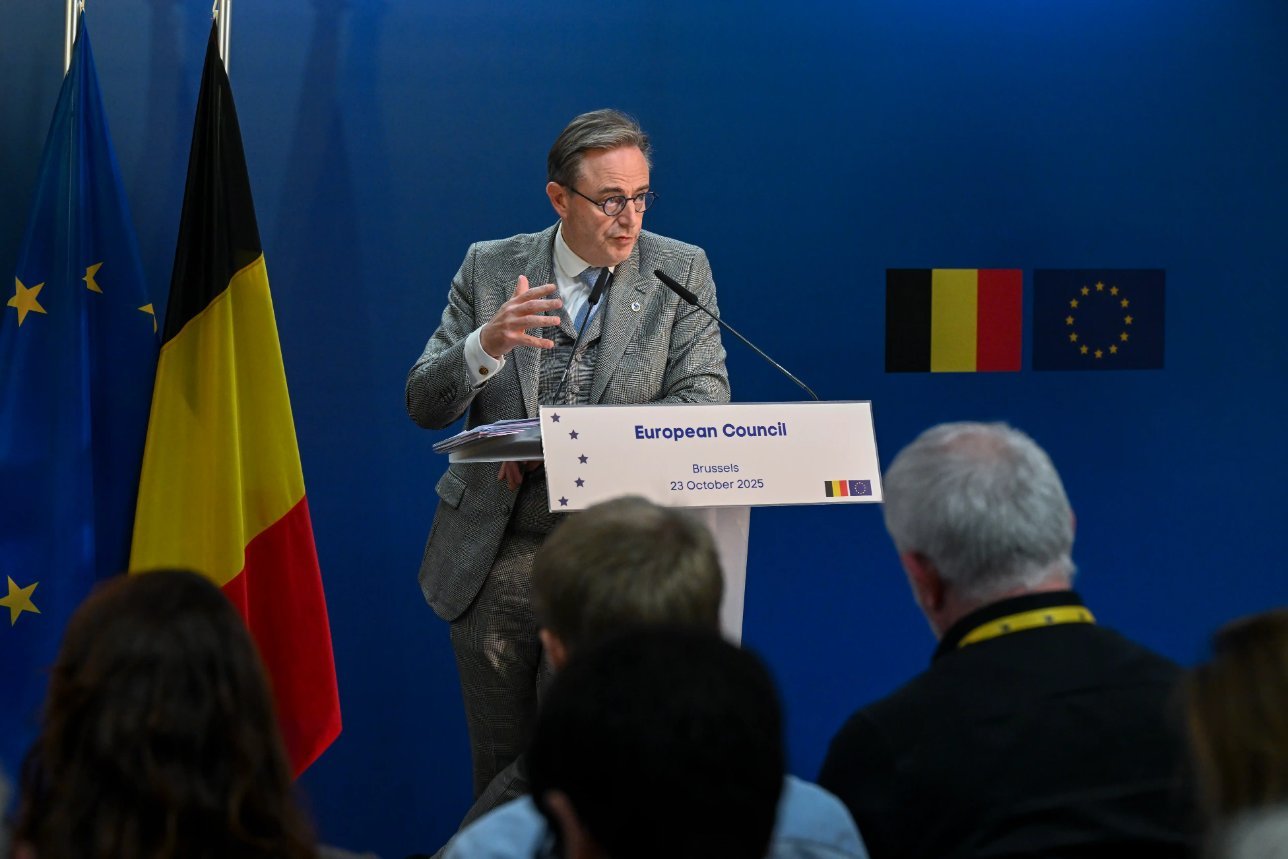
© Europese Unie, 2025, gelicentieerd onder CC BY 4.0 (newsroom.consilium.europa.eu)
De Belgische premier Bart de Wever heeft voorgesteld dat de bondgenoten van Oekraïne de kosten van de financiering van Oekraïne zelf dragen en heeft het aangaan van schulden als alternatieve oplossing aangeboden. (Euronews)
"Als Europa geld wil creëren, kan het geld creëren. Dit heet schuld. Maar dit is natuurlijk ook een heel gevoelig onderwerp," zei De Wever aan het einde van de top.
"Het grote voordeel van schulden is dat je ze kent. Je weet hoeveel het is, je weet hoe lang je het zult dragen, je weet precies wie er verantwoordelijk voor is," ging hij verder.
c. Oekraïne helemaal niet financieren
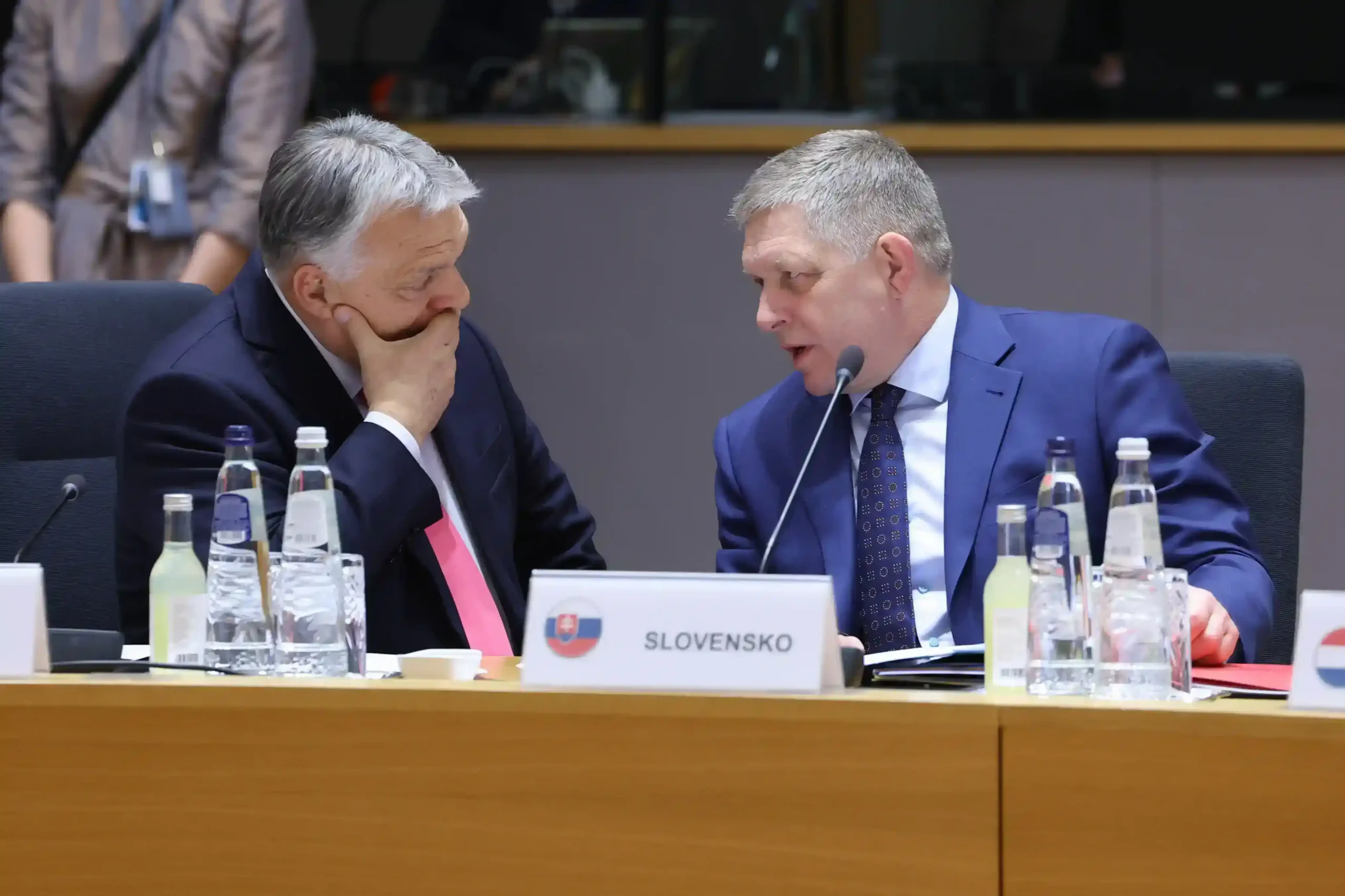
© Europese Unie, 2025, gelicentieerd onder CC BY 4.0 (newsroom.consilium.europa.eu)
De Slowaakse premier Robert Fico heeft het plan voor een lening voor herstelbetalingen en het aangaan van meer schulden afgewezen en heeft geweigerd Oekraïne volledig te steunen. (Reuters)
"Ik weiger Slowakije te laten deelnemen aan een financiële regeling die bedoeld is om Oekraïne te helpen de oorlog en de militaire uitgaven te beheersen."
Hongarije heeft het plan om meer schulden aan te gaan afgewezen. (Politico) Hongarije klaagt ook de Raad van de Europese Unie aan voor het negeren van zijn veto tijdens de stemming om rente uit bevroren Russische tegoeden naar Oekraïne te sturen, op basis van het feit dat Hongarije geen "bijdragend land" is aan de Europese Vredesfaciliteit, die de overdracht regelt. (Hongarije tegen Raad en Europese Vredesfaciliteit)
Europese burgers zijn de sleutel tot het vrijgeven van fondsen
De Europese Raad (een andere instelling dan de Raad van de Europese Unie), die bestaat uit de staatshoofden van alle lidstaten van de Europese Unie, komt op 18 en 19 december bijeen en de lening voor herstelbetalingen staat bovenaan de agenda. Dit betekent dat het tonen van het belang van het overdragen van bevroren Russische tegoeden aan Oekraïne aan binnenlandse regeringen de beste manier is om dit resultaat op korte termijn te beïnvloeden. De Europese Unie is voorstander van het plan voor een herstellingslening, maar een handvol lidstaten (België, Slowakije en Hongarije) zou het plan in de weg kunnen staan. Als het plan niet wordt aangenomen, zal Oekraïne moeite hebben om zijn defensie voor 2026 en 2027 te financieren en zal Europa kwetsbaar zijn.
Burgers uit de hele Europese Unie kunnen hun stem laten horen via verkiezingen (Hongarije en Slowakije hebben elk verkiezingen in 2026 of 2027) en regeringen kiezen die de betrokkenheid van de EU bij Oekraïne zullen versterken, ongeacht de uitkomst van de bijeenkomst van de Europese Raad in december.
Conclusie
Discussies tijdens de top van de Europese Raad over 18 en 19 december zal worden gedomineerd door de kwestie van de herstellingslening - of meer specifiek, het oplossen van het Belgische verzet daartegen. Als de kwestie tijdens de top niet wordt opgelost, kan de Europese Commissie overwegen Oekraïne voor 2026-2027 te financieren met behulp van het Belgische gezamenlijke schuldvoorstel. Aangezien België de meerderheid van de bevroren tegoeden in handen heeft, kunnen er geen acties met betrekking tot de tegoeden worden ondernomen zonder de toestemming van België. Hongarije en Slowakije kunnen ook voor problemen zorgen, vooral als de EU hun veto's verder wil omzeilen.
Ongeacht de resultaten van het besluit van de Europese Raad in december, blijft het van het grootste belang dat de Europeanen geïnformeerd en betrokken blijven. Om hun grenzen en de veiligheid van hun bevolking te garanderen, heeft Oekraïne gewone Europeanen nodig die luidkeels van hun regeringen eisen dat ze meer doen om Oekraïne te steunen. Doe vandaag nog mee door aanmelden bij EAU om je aan te sluiten bij het team van gepassioneerde pleitbezorgers in je eigen land. Maak deel uit van de geschiedenis, sluit je aan bij de oproep tot actie van deze generatie. Europese actie voor Oekraïne.